One ought to have one’s vehicle in order long before making plans for a wet weather trip, let alone loading up the boot and turning the bonnet to the coast. There is no need to overthink it: inspect the tyres, brakes, wipers, lights, battery and fluids along with your safety gear as a matter of course, then alter your driving when the rain comes. Theodore Maris would say it is all too common for roadside dramas to stem from a “she’ll be right” attitude and leave a person in the drizzle with a flat spare he has not once deigned to examine.
For those travelling Australia’s coastal roads where a shower can come on without warning, a wet weather checklist is more important than you might think. After the first rain the roads are greasy, you will lose visibility in heavy downpours in minutes and find your stopping distance well in excess of the norm. The following guide is meant to put you on the right track with some risk reducing checks, what is typically done wrong and the kind of habits that take the roughness out of a long wet drive.
The Reason for the Checks
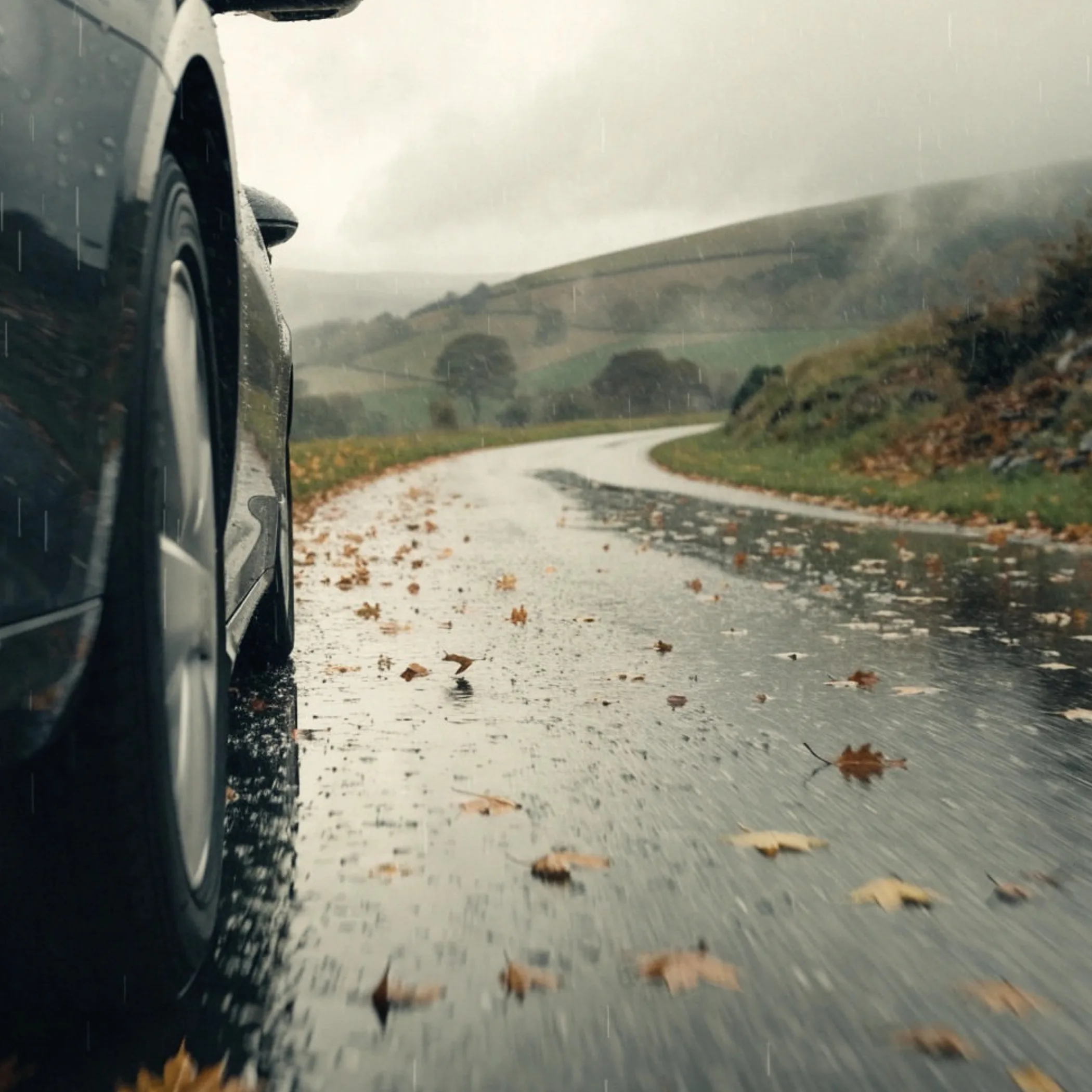
Rain is more than just water on the road. It robs you of grip, puts potholes out of sight and has a way of making a minor maintenance point into a nuisance. Maris has had his share of travellers who will make a fuss over a bakery stop or their playlist but will not give a second glance at a tyre as flat as a pancake.
Then there is the matter of moderate rain on a run of the mill road. Worn tread, a streaky wiper or tired brakes are enough to cause trouble even if the weather is not extreme. The Queensland Government have some sensible advice on road safety for these conditions: put on your headlights to be seen and see, allow more room between you and the car ahead, and slow down (see Queensland Government advice for driving safely in wet weather). You would benefit from checking rain driving pointers for Australian coasts prior to any coastal run.
Reality and Expectation
You may be under the impression that because the car is fine around town it will be fine in the rain. In reality, a bit of suburban errand running does not put your emergency braking or wet weather performance to the test, nor does it tell you how the car will handle standing water at speed on the highway. What was perfectly normal in dry weather can turn skittish and unresponsive on a slick surface.
And as for timing, factor in the fact that a three hour drive will be closer to four and a half in the coastal rain. You will be going slower, dealing with truck spray and making stops to demist the glass or bide your time through a downpour. Do not go about trying to get to the pub ahead of the weather.
A Five-Minute Scan Before You Go
Should you only have the opportunity for a once over of the car this is where to put your attention. It is not a substitute for maintenance but it will forestall the sort of thing that spoils a trip. Maris favours such a check for its simplicity; no mechanic’s diploma needed.
Best to do it before you back out and not when you are already on the servo forecourt in the sideways rain.
- Make a circuit of the car. See that the tyres are evenly inflated and free of anything lodged in the tread or damage to the sidewall.
- Put the low beams, indicators and brake lights through their paces.
- If the washer jets are not up to much, top up the fluid while you are at it and put the wipers on.
- Verify the air-con or heater will clear the windscreen and that mirrors and windows are spotless.
- A quick look under the car for any fresh leaks if it has been sitting overnight doesn’t hurt.
- And don’t forget to confirm the fuel or charge, your phone battery and that the jack and spare are in the car where they should be.
On the Subject of Tyres
When it is wet the tyres do the work, which is why so many drivers are remiss in tending to them. This is the one part of the car to be serious about. Maris would forgo a coffee of any pretension before he would a tyre check.
Tread, Pressure and the Spare
Proper tread and pressure, plus a spare you can use, are the best defence against hydroplaning. Even a serviceable vehicle will have less control and longer stopping distances on poor tyres.
As for tread depth, 1.5 mm is the legal minimum in Australia. But if you want good performance in the wet, most road safety sources and tyre men will tell you to have more margin than that. You will hear tyre firms like Tyrepower, MW Tyres, Kogarah Tyrepower, and Tyre Dispatch put forward 3mm of tread as a sound benchmark for better grip in the wet. It is not something you are compelled to do by law, but then again it is a prudent threshold to have before you set off if there is heavy rain in the forecast.
Have a look at the wear on your tyres too. Shoulders that are worn unevenly are an indication of underinflation, overinflation will show up in the centre, and feathering is often a sign of poor alignment. Such matters are of consequence since they compromise how well the tyre can shed water. For pressure checks prior to a downpour, refer to the vehicle’s placard which is the proper authority for the load and can be had from the driver’s door jamb, glovebox or fuel flap. Put aside any number put about by a friend or taken from the sidewall.
The spare should be seen to as well. I have come across travellers on the coast who have found their jack has seized or the wheel brace gone missing when they were on the shoulder with a shredded spare. One does not want to be caught with one’s guard down like that.
| Tyre Check Item | What To Look For | Why It Matters In Rain |
| Tread depth | The legal minimum is fine, but for a wet trip 3 mm or so is preferable to keep aquaplaning at bay and push water away. | Helps push water away and reduces aquaplaning |
| Pressure | When cold, set it in accordance with the placard for improved braking and stability. | Improves grip, stability, and braking |
| Wear pattern | Evenness is key; no scalloping or bald edges to ensure the road is in contact. | Maintains consistent contact with the road |
| Sidewalls | Any bulges, cuts or cracking add to the risk of a blowout on a long haul. | Reduces blowout risk on long drives |
| Spare tyre | Jack and tools to hand, and it should be inflated for a safe puncture repair. | Lets you deal with a puncture safely |
Braking And Ride Control
There is nothing to admire in brakes and suspension but once the road is broken or slick they become important. A car that is floaty or unsettled will try your patience well before it is a hazard. Theodore Maris would call this the part where you have to trust your car. If it has a habit of shuddering, squealing or pulling hard under braking when dry, get it put right. You cannot count on the rain to remedy it.
Warning Signs
A good brake check ahead of wet weather will tell you about straight-line stability and pedal feel. Should the pedal be spongy or the car veer, or if it takes its time stopping, make an appointment with a mechanic. Any shortcoming in the brakes is only magnified by the longer distances required on a wet road.
Then there is the suspension. Worn shocks will let the tyres break contact with the tarmac over a bump or a pool of water, unsettling the car in a corner. An excessive bounce after a hump or clunking over rough ground means it needs attention before you put in some miles. After a rain the coastal roads may seem in order but there are patched and uneven sections to be had.
Clear Sight Saves Stress
In a downpour visibility is the first to suffer; even on a road you know you might as well have a grey bedsheet over the windscreen. Maris has put in enough time on Victorian roads in the rain to know that wipers in bad shape are an irritation within half a minute. If you are not seeing properly the journey is going to be more arduous and risky.
Wipers, Fluid, Lights
Do not put off replacing wipers that judder or leave streaks until they give way in the rain. Top up the washer bottle, plain water is no match for the salt spray and truck muck you will find. As for the lights, see to the low beams, tail and brake lights. In these conditions you need to be seen as much as see what is in front. Fog lights have their place in poor visibility but are not to be used as a matter of course. Inside, the fan and air-con should demist the glass in short order. Some will rub the screen with a sleeve and think they have done something about it. All they do is make a mess of it and themselves.
Electronic Aids
For all the safety systems in a modern car they are no substitute for common sense. Maris has seen his share of drivers running on wretched tyres and putting their faith in the acronyms on the dash.
There is no substitute for getting the basics right if one is to make the most of ABS, ESC and traction control. When visibility, brakes or tyres are substandard, these systems are left to put right what ought to have been nipped in the bud back in the driveway.
What These Systems Are For
ABS will keep the wheels from locking under a firm application of the brakes and let you steer at the same time. Should the car begin to wander off course, ESC will rein it in by way of individual wheel braking and a cut in engine power to arrest any skid. Traction control is there to check wheelspin on a slick surface as you put your foot down.
Do not be among those who think they will shorten your stopping distance come what may; their job is to see you keep control. You will still need more room to stop in the rain on a wet road than you would in dry conditions, ABS and ESC notwithstanding. A warning light on the dash for any of them means the vehicle needs an inspection prior to any journey.
Driving In The Rain

After the checks are out of the way, it is a matter of how you drive. Put too much speed into standing water and all your preparation is for nothing. Theodore Maris would say that is when patience is worth more than confidence.
The road when it is wet does not tolerate ego, it wants smoother inputs and some space. Arriving late and on edge with the faint odour of overheated brakes is no achievement.
Useful Adjustments
It is better to slow for a bend before you get to it. Put more distance between yourself and the utes, vans and laden SUVs ahead since in the rain the stopping distance has a way of lengthening. Be earlier and gentler with the brake and do not jerk the steering. Encountering standing water calls for holding the wheel and taking your foot off the accelerator, not mashing the brakes.
In the event of aquaplaning the car can become unresponsive or seem to have no weight. Do not make any sharp corrections, remain calm and let the tyres find their grip again while you look where you are heading. On an open road give the larger vehicles and road trains a wide berth; the spray from them in a downpour will take your vision away for a few seconds and in the moment they are an age long.
Coastal Roads Have A Way Of Catching You
The Australian coast has its peculiarities. Between the salt, the wind, leaf litter, tourist traffic, sudden showers and the odd polished intersection in town you can have a slippery affair. Any section of road that looks the part is likely to demand your full concentration, says Theodore Maris from his experience of coastal driving.
Make of the road conditions what you will when you are on the Great Ocean Road or the South Coast, or about any headland or estuary; the rain can turn for the worse in a hurry. Sensible types will have done their homework on rain driving for the eastern seaboard before setting off.
Problems You Will Find
Then there is the matter of standing water in the low spots of car parks and near boat ramps or the beach. Coffs Coast Holiday Parks and other accommodation areas in the vicinity can be locally flooded after a good soaking even if the highway is fine. After the first rain, sand, oily residue and leaves from around the towns leave the surface very slick.
Wet weather and only a day to spare? Make for the shorter sections and the routes where you can put in fuel or find shelter during the day. There is no point in an ambitious detour over an unsealed track you do not know unless you are sure of the access. Up north in the wet season or with a cyclone alert you will find roads that are not for the beginner, or fit for purpose at all. The headline distance is less important than having a realistic sense of time.
| Trip Type | Best Approach In Rain | What Usually Goes Wrong | Who It Suits |
| Short day trip | An early start on sealed main roads | Making a rush of it home in the dark | Most drivers |
| Coastal weekend | Long breaks and some contingency stops | Not allowing for local spray or flooding | Those with the confidence and time |
| Remote wet-season route | Weather and closures first | To think a map is enough | Experienced travellers |
Have An Emergency Kit
You like to think you will not need it but it will justify its presence when matters go sideways. As for heroic improvisation on the side of the road armed with a torch and a phone that will not work, Theodore Maris has little time for it and favours a more discreet sort of preparation. There is no call to make of your boot an expedition headquarters, yet you should have the means to cope with a puncture, delays, bad reception or an unscheduled halt in lousy weather.
Gear You Should Have
An emergency kit worth having will have a torch, power bank or phone cable, some water and snacks, a rain jacket, first-aid supplies and a high-visibility piece of equipment if you are so inclined. Put in the jack and wheel brace for the spare tyre, a pair of gloves and a towel or rag. And in regional parts where mobile signal is apt to fail, a paper map has its uses; Theodore Maris has one along for that reason and old habits, as well as because a flat battery is never well timed.
Roadside assistance details ought to be at hand before you set off. With a rental from Sixt Australia or another national outfit, it is best to put to rest any questions over support numbers, what counts as tyre damage or wet-weather restrictions on the vehicle. Towing or a new tyre will cost more than simple assistance, so make sure of these things prior to the trip and not after you are in a puddle.
- The five-minute departure scan
- Properly see to the tyres, pressure, tread and the spare.
- Make certain the brakes, demister, wipers and lights are in order.
- Have your phone charged and an emergency kit packed.
- Then allow for the journey to be a bit longer and put some space between yourself and the road ahead.
Intended Audience
We have put this guide together for the Australian driver making a highway run, a coastal weekend or a foray into the regions in the wet. It will be of some use to those who have not given their car a thorough once-over of late, renters and the like, as well as newer drivers. A learner making use of EzLicence or Driver Knowledge Tests material will note the safe driving principles here are in keeping with what they would be taught.
Then there are those who would do well to exercise caution: anyone whose tyres are worn or brakes in doubt, with poor night vision or scant experience of the wet, or whose route takes in unsealed, remote or flood-prone roads. To put off the drive might be the sensible thing.
In the end
When it comes to pre-departure checks in wet weather the unglamorous ones are the ones that count: the fluids, tyres and pressure, the wipers, brakes and lights. Do them right and then drive as though the road is under no obligation to you. As Theodore Maris would say, you can have a good rainy trip but you have to be ready for the tedium of it all when the sky does open up.
A sound car and a plan that is realistic will suffice, you need not have a four-wheel drive to die for or a bootful of gadgets. Just enough sense to accord the conditions the respect due.
Some Common Questions
What 6 things warrant a check?
Tyres and their pressure, fluid levels, brakes, wipers and lights should be first on the list. On a protracted wet-weather outing one would also want to look at the jack and spare, the battery and whether the windscreen can be demisted without trouble.
Going on a long road trip?
Test the wipers and washers, put the tyre pressure placard to use and verify the tread, ensure braking is normal and pack an emergency kit. For a regional or coastal route you will want to factor in extra time for the elements and the state of the road.
Wet weather driving tips
Do not make sudden moves with the steering or brakes, keep to low beams and slow down. Should the rain make visibility too much to handle, get out of the way of traffic in a legal and safe spot until it passes.
How to be safer in the wet?
For one, have wipers and tyres that are up to scratch. For two, ease off the speed and have more room to stop. And for three, be smooth about acceleration and braking so as not to invite a skid or aquaplane.
Is the legal minimum for tread sufficient in the rain?
It may be by the rules of the road but it does not afford the margin for touring some prefer. Most tyre men would have you change them before they are that low for better grip in the wet, 3 mm being a more practical measure.
